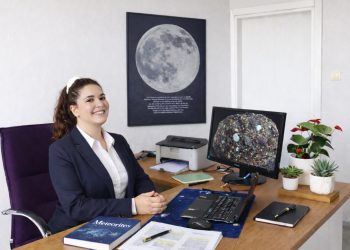

Our research team members have been awarded by a TUBITAK project that deals with breast cancer at the cellular level by SEM-EDS, AFM, FTIR and Raman spectroscopy techniques in a multidisciplinary way.
This project will guide the treatment of breast cancer
Led by Prof. Dr. Ozan Ünsalan, a faculty member of the Department of Physics at Ege University (EÜ) Faculty of Science, with the scientific framework designed by Assoc. Prof. Dr. Erdal Binboğa, a faculty member of the Department of Biophysics at the Faculty of Medicine, and Prof. Dr. Hüseyin Aktuğ, a faculty member of the Department of Histology and Embryology. The project will investigate the effects of JNK inhibition applied to breast cancer cell lines on cancer cells for the first time using molecular, morphological, microscopic, and spectroscopic methods. The data obtained from the research, which will be conducted by a multidisciplinary scientific team, will contribute to significant advances in the diagnosis and treatment of breast cancer as well as to the literature.
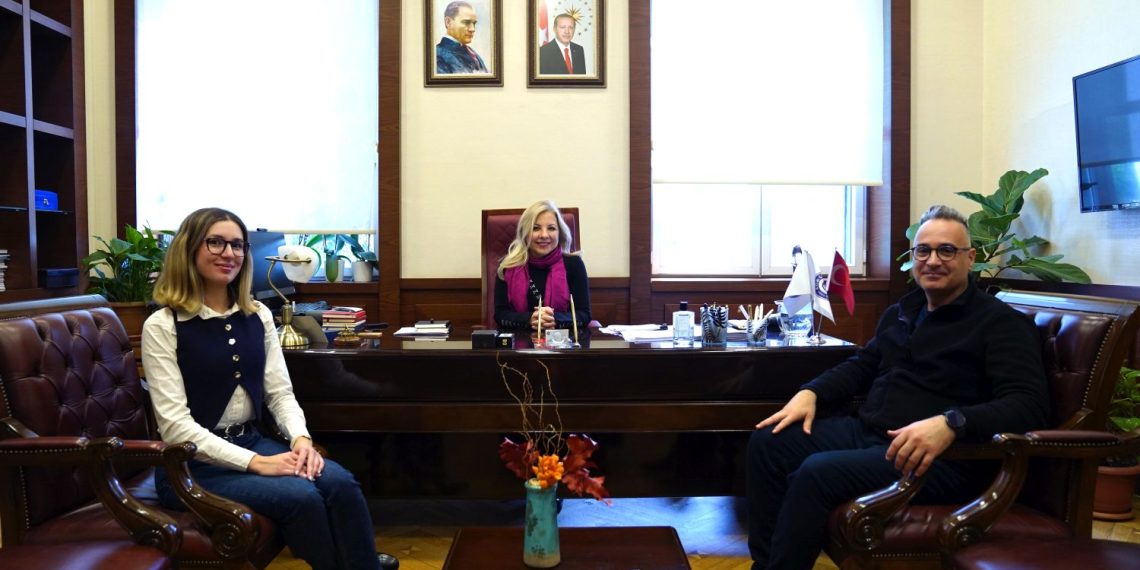
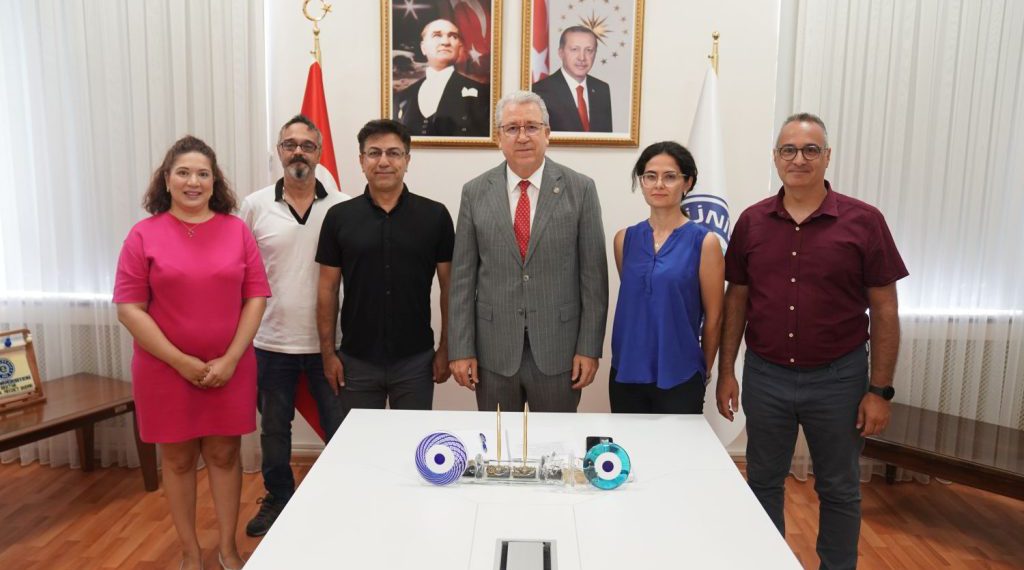
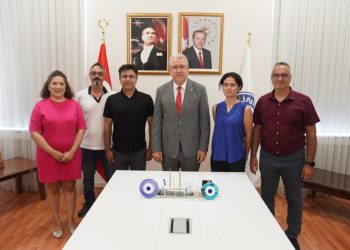
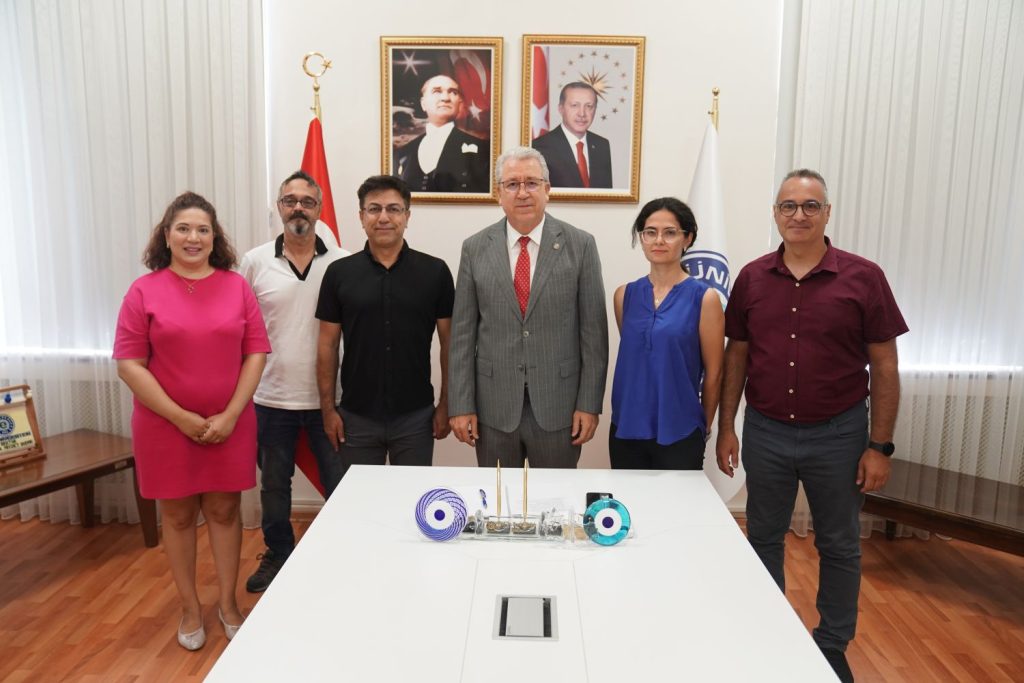
Hosting the project team at his office, Ege University Rector Prof. Dr. Necdet Budak said, “We are proud to be the university that submits the most project applications to TÜBİTAK every year and has the most projects accepted, thanks to the dedicated work of our academics. In recent years, Ege University academics have been carrying out important projects with a multidisciplinary approach, particularly in the diagnosis and treatment of cancer and many other diseases. The project, led by Prof. Dr. Ozan Ünsalan, which will guide breast cancer research, was deemed worthy of support under the TÜBİTAK 1002 Rapid Support Program. I congratulate the team that carried out this project, which will make a significant contribution to the diagnosis and treatment of cancer, one of the most important diseases of our time. As Ege University, we will continue to support all our academics who conduct research and produce projects.”
Providing information about the content of the research, Project Leader Prof. Dr. Ozan Ünsalan, a faculty member of the Department of Physics at the Faculty of Science, stated, “The study will reveal for the first time how inhibition of the c-Jun N-terminal kinase (JNK) signaling pathway, which plays a significant role in the spread of breast cancer and its resistance to treatment. The research results will reveal how JNK inhibition affects the epigenetic regulators of breast cancer cells and how cancer cells differ from normal cells. Within the scope of the project, breast cancer cells will be systematically addressed for the first time using technologies such as FTIR spectroscopy, micro-Raman spectroscopy, Atomic Force Microscopy (AFM), and Scanning Electron Microscopy-Energy Dispersive Spectroscopy (SEM-EDS). Using these methods, the mechanobiophysical properties of cancer cells, particularly their surface morphologies and elemental compositions at the cellular level, will be analyzed in detail. The expected results are considered to be of great importance and promise in guiding the treatment of breast cancer.
Prof. Dr. Ozan Ünsalan stated, “This multidisciplinary collaboration, encompassing Health Sciences and Natural Sciences; Biophysics, Histology and Embryology, Medical Biology, and Physics, will bring together the expertise and methods of each discipline, providing a more comprehensive and holistic research approach. Findings obtained at the cellular level could form the basis for developing new treatment methods for breast cancer and improving existing treatment strategies. In particular, understanding the mechanobiophysical properties of breast cancer cells could play an important role in developing targeted therapies.”
“Academics from different universities and disciplines are participating in the project.”
The project team includes Assoc. Prof. Dr. Erdal Binboğa from the Department of Biophysics, Faculty of Medicine; Prof. Dr. Hüseyin Aktuğ from the Department of Histology and Embryology; Prof. Dr. Çığır Biray Avcı from the Department of Medical Biology , Prof. Dr. Ozan Ünsalan from the Department of Physics at the Faculty of Science, Research Assistant Dr. Çisem Altunayar Ünsalan from the Institute of Science, and Research Assistant Dr. Berrin Özdil Bay from the Department of Histology and Embryology at Süleyman Demirel University Faculty of Medicine are participating in the project.